
Conecuh County Arrest Records
An arrest record is the law-enforcement side of the event. It may identify the person arrested, the arresting agency, booking date, alleged offense, bond information, and jail status when those details are released. Conecuh County does not publish a verified official web jail roster in the research file, so current booking and custody questions should go to the Sheriff's Office/Jail at 104 Liberty Street in Evergreen or to official app channels when available.
A court charge record is the filed accusation after the arrest or citation. It may show the complaint, statute, offense level, case number, bond, first setting, later amendments, and charge status. The full criminal case file, including pleas, motions, disposition, and sentence, belongs on the Conecuh County criminal court records path.
Timing is the common source of confusion. A person can be booked before a court case is visible online, and a charge can be amended after the first booking entry. Bond may appear through jail, magistrate, or court records depending on the charge and when release is considered. For that reason, arrest records answer custody questions, while court charge records answer what accusation was filed and how the court is handling it.
Find Conecuh County Charges
Filed Conecuh County charges are searched through court channels. The Circuit Clerk maintains criminal and warrant divisions for Circuit and District Court proceedings. Remote case lookup uses Alacourt Access, which covers Alabama criminal, civil, small claims, state traffic, domestic relations, and child support records. In-person viewing is available through the clerk's office when a record is public and not restricted by court rule or order.
Alacourt is useful when a charge has become a court case, but it is not the only access channel. A recent arrest with no visible court entry may still be with the Sheriff's Office, jail, magistrate, or prosecutor. A municipal ordinance arrest may route to the city court named in the paperwork. A felony can begin in District Court for first appearance or preliminary hearing and later move to Circuit Court after indictment. That timing explains why one search may show custody or warrant information before the full case record appears in the remote court system.
Alacourt's posted case-detail fields help connect charges after arrest to the later docket. Basic case information confirms the court and case number. Court actions and setting dates show the case path. Party information identifies public parties. Financial history may show costs, fines, restitution, or payments. The case action summary ties those entries together as a timeline, which is often the best way to see whether each charge is still pending or has been resolved.
- Start with the court level: District Court for misdemeanors, traffic, and preliminary hearings; Circuit Court for felonies.
- Search Alacourt by party name or case number when remote paid lookup is suitable.
- Call or visit the Circuit Clerk for public in-office viewing, certified copies, or older records.
- Contact the Sheriff's Office for custody, booking, or warrant execution questions.
- Check municipal court if the arrest or missed court date came from a city ordinance or municipal traffic matter.
Note: The clerk can explain office procedure, but the local court site says the clerk cannot give legal advice.
Conecuh County Charge Documents
Conecuh County charge records can begin in several ways. A misdemeanor or traffic case may start with a complaint or citation in District Court. A felony can move from arrest and preliminary hearing into Circuit Court after a grand jury indictment or other charging action allowed by law. The District Attorney for Circuit 35 prosecutes state criminal cases and may be involved in restitution, worthless-check, diversion, or collection matters where authorized.
Charge wording should be read with care. A single arrest can produce more than one count, and each count can have a different statute, severity level, bond term, setting, and outcome. The charge label can also change as facts are reviewed, evidence is tested, or plea negotiations occur. For that reason, a court charge record should be followed through the case action summary rather than read from the first accusation alone.
District Court has an important early role in the arrest-to-charge path. The Conecuh court research states that District Court handles misdemeanors, traffic, small claims, lower civil matters, and preliminary hearings in felony prosecutions. Circuit Court handles felony prosecutions, jury trials, larger matters, and appeals from limited courts. A felony charge may therefore have early District Court entries before the Circuit Court record becomes the main prosecution file.
| Document | Who uses it | What it starts |
|---|---|---|
| Complaint | Law enforcement, prosecutor, or complainant under court procedure | A misdemeanor, preliminary felony matter, or other charge filed with the court |
| Information | Prosecutor where allowed | A prosecutor-signed charging document without grand-jury indictment in permitted cases |
| Indictment | Grand jury | A written felony accusation that sends the case into Circuit Court |
The CourtListener legal research site is a research tool, not the official Conecuh filing docket.
Official charge status should be verified with the court record, clerk, prosecutor, or issuing court rather than with a legal-research summary.
Conecuh County Charge Status
A charge is not the same thing as a conviction. A person may be arrested, charged, released on bond, have charges amended, plead to a reduced charge, go to trial, or have a charge dismissed. Alacourt case detail may show court action, setting dates, case status, parties, financial history, and case action summary entries, but the meaning of a docket entry depends on the actual order or minute entry.
| Status | What it means |
|---|---|
| Pending | The charge has not reached final disposition. |
| Amended or reduced | The filed charge changed by prosecutor action, plea agreement, or court order. |
| Dismissed | The charge ended without conviction, subject to the wording of the order. |
| Nolle prosequi | The prosecutor declined to continue that charge, when entered by the court. |
| Conviction | The court entered guilt by plea, verdict, or other lawful judgment. |
Charge vs Conviction Records
Conecuh County court charges after arrest show allegations filed in court. A conviction is a final judgment of guilt. Public readers should not treat a pending charge, arrest, dismissed charge, or warrant entry as proof of conviction. The court record must be read through the disposition, sentence, and any later expungement or sealing order.
| Point | Charge | Conviction |
|---|---|---|
| Timing | Filed after arrest, citation, complaint, or indictment | Entered after plea, verdict, or lawful judgment |
| Meaning | An allegation pending court action | A final finding or admission of guilt |
| Where to verify | Complaint, indictment, docket, clerk, or Alacourt | Disposition, sentencing order, case action summary, or certified court copy |
Conecuh County Prosecutor Channel
The Alabama District Attorneys Association lists Todd Watson as District Attorney for Circuit 35, serving Conecuh County. The elected DA mailing office is listed at P.O. Box 397, Monroeville, AL 36461, phone (251) 575-2067. A 35th Judicial Circuit Conecuh County District Attorney worthless-check payment contact is listed at 111 Court Street, Room 207, Evergreen, phone (251) 578-4977. The prosecutor's role is different from the clerk's role. The DA prosecutes state criminal cases, presents felony matters, works with victims, and may handle certain restitution or diversion functions.
The U.S. Attorney for the Southern District of Alabama handles federal prosecutions in the district that includes Conecuh County.
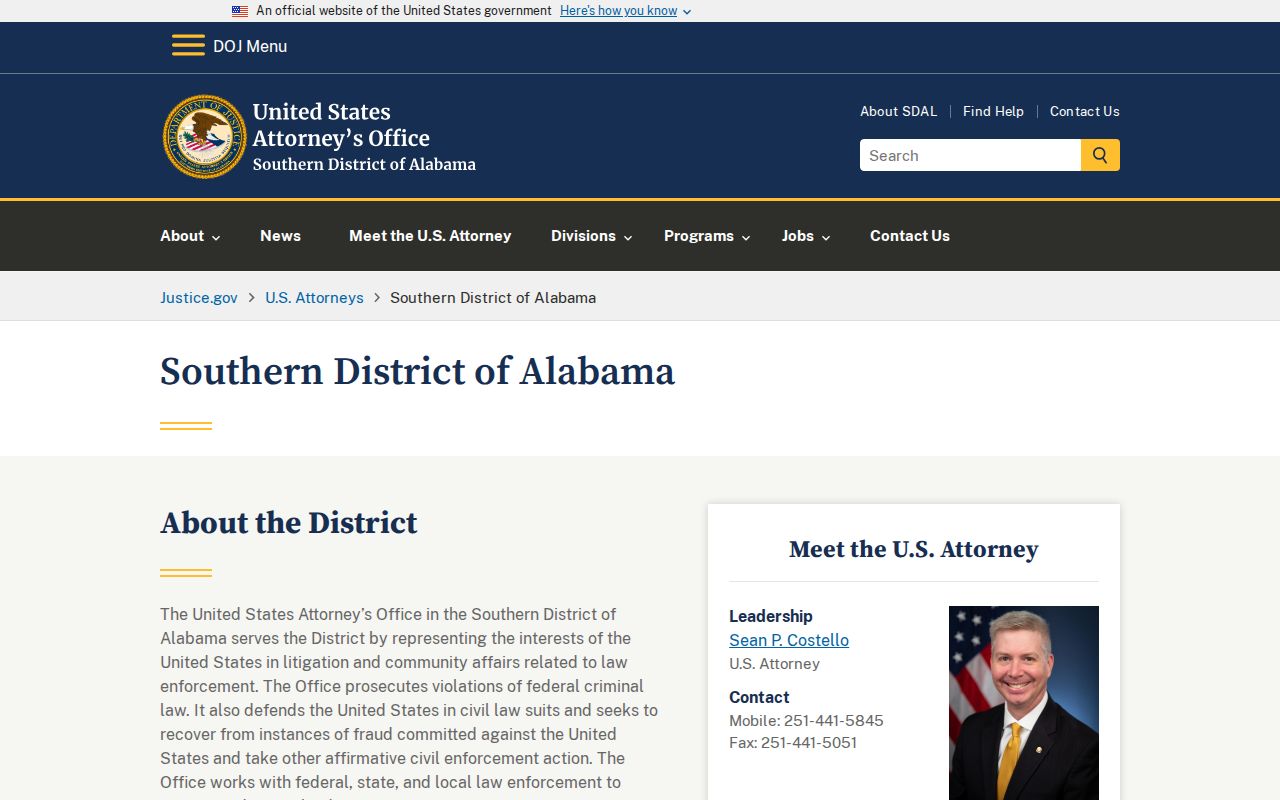
Federal charges use federal court channels and PACER, while Alabama state charges use Conecuh County and state trial-court channels.
The U.S. Attorney's district information confirms that the Southern District includes Conecuh County.
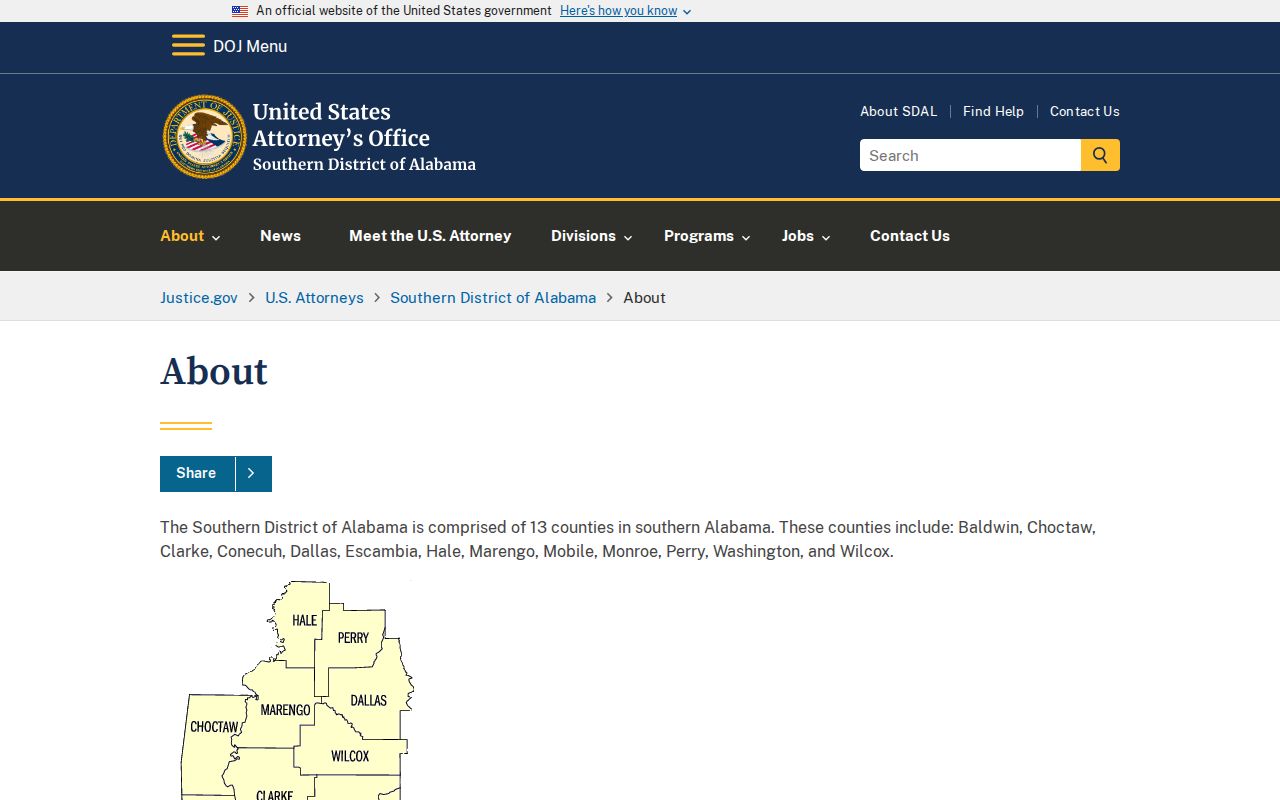
That federal district detail helps separate state court charge records from federal criminal prosecutions.
Restricted Conecuh County Charges
Some arrest records and charge records are not open to general public lookup. Juvenile records are restricted. Sealed and expunged records are removed from ordinary public access. Search-warrant materials can be sealed during active investigations. Protected victim information, minor details, Social Security numbers, protected financial data, and certain domestic or family details may be redacted or withheld.
Alabama expungement is a court process under Title 15, Chapter 27. ALEA's expungement information states that Alabama courts grant expungements, not ALEA by itself. For a Conecuh County charge, the petition normally routes to the criminal division of the court where the charge was filed.
Older charge records may also require clerk help because Conecuh County courthouse records have historic fire-related gaps and may not all appear in modern electronic systems.
| Point | Sealed | Expunged |
|---|---|---|
| Public access | Hidden or limited by rule, statute, or court order. | Removed from ordinary public access after a qualifying court order. |
| How it happens | Confidentiality rule, legal restriction, or judge's order. | Petition, service on required agencies, possible objection, and court ruling. |
| Official use | May remain available to authorized court or law-enforcement users. | Limited official-use exceptions may remain under Alabama law. |
The public-record question also changes by custodian. Court records are governed by Alabama court-record privacy rules, while jail and law-enforcement records may involve active-investigation, security, medical, juvenile, or protected-person limits. A requester who needs a certified court disposition should use the Circuit Clerk. A requester who needs booking confirmation, jail release status, or law-enforcement incident material should start with the Sheriff's Office and expect some information to be withheld when release would violate law or safety rules.